Tree Removal Buffalo NY homeowners search for usually starts with one simple question: does this tree need to come down?
If you have lived in Buffalo for more than a few winters, you already know how hard the weather can be on a mature tree. Between lake effect snow, sudden wind gusts off the lake, and the freeze thaw cycle that runs through every March, trees in this part of Western New York take a beating that trees in milder climates simply do not deal with. Sooner or later, most homeowners in the area end up asking the same question: does this tree need to come down, and if so, who do you call.
This guide walks through what actually goes into a tree removal in Buffalo, NY, what it tends to cost, when a permit is required, and what a professional crew should be doing on your property from the first phone call to the final cleanup.
When You Actually Need Tree Removal in Buffalo
Not every damaged or unattractive tree needs to go. A lot of homeowners call for a removal quote when a good trimming and some structural pruning would have solved the problem for a fraction of the cost. On the other hand, some trees genuinely are not worth saving, and waiting too long turns a manageable job into an emergency.
A few signs that point toward removal rather than trimming:
- Large sections of dead wood, especially in the upper canopy where it is hard to see from the ground
- A trunk that leans noticeably more than it did a year or two ago
- Fungus growing at the base of the trunk, which usually means root rot
- Cracks running vertically along the trunk
- A tree growing dangerously close to power lines or the roofline
- More than half the root system exposed or damaged by construction, flooding, or grading work
If you are not sure which category your tree falls into, that is exactly what a free on site estimate is for. Our crew looks at the whole picture, not just the one branch that worries you, before recommending tree removal over trimming.
What Tree Removal Costs in Buffalo, NY
Pricing depends on a handful of factors: the size and species of the tree, how close it is to structures or power lines, whether a crane is needed, and how much cleanup is involved. As a general range, most residential removals in the Buffalo area run somewhere between four hundred and twenty five hundred dollars. A small ornamental tree in an open yard sits at the low end. A large oak or silver maple next to a house, especially one that requires crane work and careful rigging, sits at the higher end.
Stump grinding is almost always quoted separately from the removal itself, since plenty of homeowners are fine leaving a flush cut stump and do not need it ground down. If you do want the stump gone, ask about bundling it with the removal, since most companies will knock a little off the combined price.
Every estimate should be flat rate and given to you before any work starts. If a company will not give you a number without seeing the property, that is normal for larger or more complicated jobs, but you should never be handed a surprise bill after the fact.
Do You Need a Permit to Remove a Tree in Buffalo?
This is one of the most common questions we get, and the honest answer is it depends on where the tree is. Trees growing in the public right of way, meaning the strip of land between the sidewalk and the street that the city technically owns, usually require a permit before removal. Trees on your own private property typically do not, though rules can vary slightly by municipality if you live in one of the surrounding towns rather than the city itself.
A reputable tree service will know the local rules for whichever town you are in and can pull the paperwork on your behalf when it is needed. This is worth asking about up front, since removing a right of way tree without a permit can result in a fine even if the tree genuinely needed to come down.
How Buffalo Weather Shapes Tree Removal Timing
Buffalo sits right on the edge of the Lake Erie snowbelt, which means winter storms can load branches with wet, heavy snow far faster than most trees are built to handle. This is part of why emergency calls spike every winter, usually after the first big lake effect event of the season. Trees that were borderline in October are often the ones that fail in January.
Spring brings its own issues. As the ground thaws, root systems that were weakened over the winter can lose their grip, and a tree that looked fine in December can suddenly become a leaning hazard by April. If you noticed a lean or new cracking over the winter, it is worth getting a professional look before the ground fully softens.
Summer and early fall are actually the best times to schedule non emergency removals. Crews are not competing with storm response calls, ground conditions are more stable for equipment, and you avoid the scheduling backlog that builds up every winter.
What to Expect During a Professional Tree Removal
The Assessment
A crew member walks the property with you, looks at the tree from multiple angles, checks for hazards like power lines or nearby structures, and talks through the plan for getting the tree down safely. This is also when you will get your flat rate quote.
The Takedown
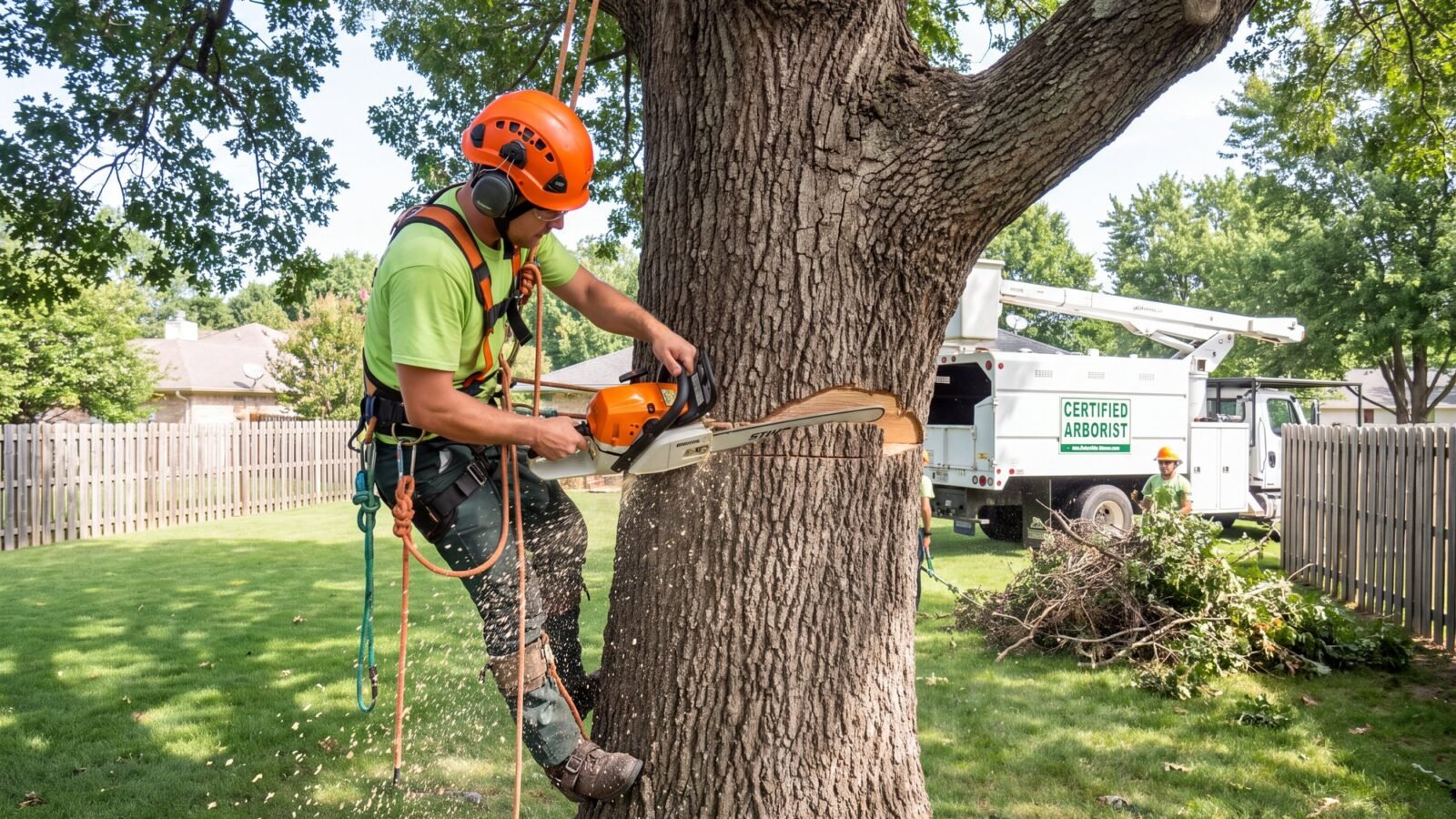
Depending on the size of the tree and how much room there is to work with, removal happens either by felling the whole tree in one piece in open areas, or by taking it down in sections using ropes, rigging, and sometimes a crane when a tree is too close to a house or power line to fell conventionally.
Cleanup and Stump Options
Branches typically get chipped on site, and the trunk wood is either hauled away or left for you if you want firewood. The stump can be left flush cut, or ground down below grade if you plan to replant or resod that section of the yard.
A good crew does not consider the job finished until the property has been raked, blown clear of debris, and walked one more time with you before they leave.
Choosing a Tree Removal Company in Buffalo and the Surrounding Towns
A few things worth checking before you hire anyone:
- Ask to see proof of liability insurance and workers compensation coverage. This protects you if something goes wrong on your property.
- Get the estimate in writing, with the price and scope of work spelled out.
- Ask how they handle emergency situations, especially if you are calling about a tree that is already down or actively leaning.
- Look for a company that actually works in your specific town regularly rather than one that treats it as a rare out of the way job.
TreeCraft Tree Service has been doing removals across Buffalo and the surrounding communities since 2016, from tight city lots in the Buffalo, NY area to the wider suburban properties out toward Amherst, Orchard Park, and Hamburg. If you are dealing with a tree that came down suddenly rather than one you have been putting off, our guide to emergency tree removal in Buffalo covers what to do in the first hour.
Frequently Asked Questions
How long does a typical tree removal take?
Most residential removals are finished in a single day, including cleanup. Larger trees requiring crane work can sometimes stretch into a second day.
Will removing a tree damage my lawn?
A careful crew uses plywood mats under equipment and protects landscaping along the path to the tree. Some disturbance to the grass directly under the work area is normal but recovers quickly.
What happens to the wood?
Branches are chipped on site. Trunk sections are hauled away unless you would like them left as firewood, which most companies are happy to do.
Can you remove a tree that is already leaning or partially fallen?
Yes, and this should be treated as an emergency call rather than a scheduled appointment. A leaning or partially fallen tree can shift or drop without warning.
If you have a tree in Buffalo or the surrounding area that needs a second opinion, get in touch for a free estimate. We will walk the property with you and give you a straight answer, not just a sales pitch.
Anyone weighing Tree Removal Buffalo NY options should know that, for more on evaluating a hazardous tree, the International Society of Arboriculture publishes a helpful homeowner guide.