Stump Grinding Buffalo Rochester NY homeowners request most often comes right after a tree removal, once the stump is the only thing left in the yard.
Getting a tree removed is often only half the job. What is left behind, the stump, tends to sit there for years longer than anyone planned, mostly because homeowners either do not realize stump grinding is a separate service or they underestimate how much of a nuisance an old stump actually becomes. Here is what stump grinding involves, what it costs across Buffalo and Rochester, NY, and why most people who put it off end up regretting the wait.
Why a Leftover Stump Is More Than Just an Eyesore
A stump sitting in the yard is not a passive object. It is actively decaying wood that creates a handful of ongoing problems the longer it stays.
- It attracts carpenter ants, termites, and other wood boring insects that can eventually move toward your house
- Root suckers sprout up around the base for years, creating new unwanted growth you have to keep cutting back
- It is a tripping hazard, especially once grass grows up around the edges and hides it
- Lawn mowers have to navigate around it indefinitely, which usually means an awkward patch of overgrown grass right around the stump
- As the wood decays, it can leave a soft, uneven patch of ground that settles unevenly over time
None of these problems are urgent on their own, but they add up, and most homeowners who finally get a stump ground down say the same thing: they wish they had done it years earlier.
How Stump Grinding Actually Works
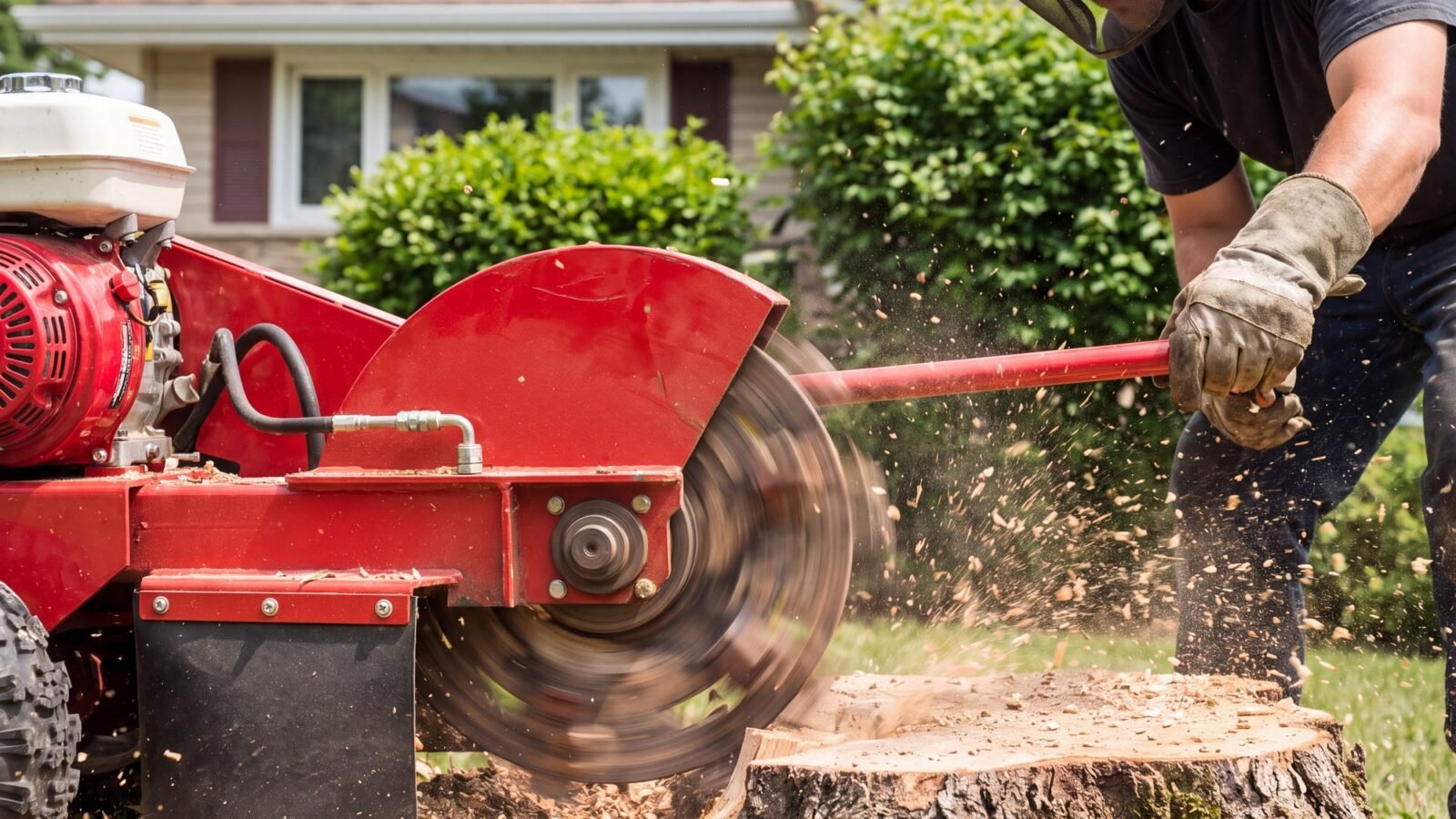
A stump grinder is a machine with a rotating cutting wheel, usually studded with carbide teeth, that chews through the stump and its major surface roots. The operator works the wheel back and forth across the stump, grinding it down in layers until it reaches the target depth below the surrounding grade, typically somewhere between six and twelve inches down.
Grinding that deep matters if you plan to replant in the same spot, lay new sod, or eventually build something like a patio over the area. A shallow grind might look fine on the surface but leaves enough root mass underneath to cause problems later, including new sprouting or an uneven surface as the remaining wood continues to decay.
Once the grinding is finished, what is left is a pile of wood chips and soil mixed together, plus a shallow depression where the stump used to be. Most companies either haul this debris away or leave it with you as free mulch, and the area gets fine graded so it is ready for grass seed, sod, or whatever you have planned next.
What Stump Grinding Costs
Pricing depends mostly on the diameter of the stump, since larger stumps simply take longer to grind through, along with how many stumps are on the property and how accessible they are for the equipment. Multi stump jobs, like clearing out several stumps left over from an overgrown lot or a row of old trees, are typically priced together and often work out to a better per stump rate than grinding a single stump on its own.
If you are already scheduling a tree removal in Buffalo or a tree removal in Rochester, ask about bundling the stump grinding into the same visit. It is usually more efficient for the crew to handle both in one trip, and you avoid having to schedule and coordinate a second appointment later.
Stump Grinding Versus Stump Removal: What Is the Difference
These two terms get used interchangeably, but they describe genuinely different processes. Stump grinding, the more common and generally less expensive option, chews the visible stump and major surface roots down below grade using a grinding wheel, leaving the deeper root system in the ground to decompose naturally over time.
Full stump removal involves physically digging out and extracting the entire root ball, sometimes with an excavator, which leaves a much larger hole to fill and typically costs significantly more. Removal is occasionally necessary for specific situations, like when a new structure’s foundation needs to go in that exact spot, but for the vast majority of homeowners simply looking to reclaim their yard, grinding accomplishes the same practical result for less money and less disruption to the surrounding area.
Can You Grind a Stump Yourself?
Rental stump grinders are available, and for a small, soft wood stump on flat, open ground, a determined homeowner can sometimes manage it. That said, these machines are genuinely dangerous if you have not used one before. The cutting wheel throws wood chips and debris at high speed, the machine can kick unexpectedly if the wheel catches a hidden root or rock, and grinding deep enough to actually solve the problem takes more time and control than most first time users expect.
There is also the question of what is underground that you cannot see. Hitting a buried utility line, an irrigation pipe, or even a large rock with a rented grinder can turn a weekend project into a much more expensive problem than the stump ever was.
Stump Grinding Across Buffalo and Rochester, NY
Soil conditions vary enough across the region that it is worth having a professional look at your specific property before assuming a job will be quick. In parts of the Buffalo area with heavier clay soil, especially closer to the lake plain, grinding can take a bit longer since the ground itself offers more resistance. Around Rochester, similar lake plain clay conditions apply in a lot of neighborhoods, though inland areas with more glacial till tend to grind a little easier.
We handle stump grinding as either a standalone service or bundled with a removal, across towns including Hamburg, Depew, and Clarence in the Buffalo region, and Greece, Brighton, and Henrietta around Rochester.
If you are dealing with several stumps left over from clearing an overgrown section of property rather than just one or two, that might actually fall under our land and lot clearing service, which handles the whole job including brush and stump removal together.
What to Do With the Wood Chips
The mulch produced by grinding a stump is often coarser and less finished looking than bagged mulch from a garden center, but it is perfectly usable around trees, shrubs, and garden beds once it has had a little time to settle. Fresh stump grindings can temporarily tie up nitrogen in the soil as they begin to break down, so it is generally best to let a pile sit and age for a few weeks before spreading it directly around plants, or mix it into an area that will not be planted right away.
If you would rather not deal with a pile of mulch at all, most companies are happy to haul the grindings away as part of the job. Just make sure this is clarified before the work starts, since hauling away debris sometimes carries a small additional cost compared to leaving it on site.
Frequently Asked Questions
How deep do you grind a stump?
Standard grinding goes six to twelve inches below grade, which is deep enough for replanting or laying new sod directly over the spot.
What happens to the wood chips afterward?
We can haul the grindings away, or leave them piled on site if you would like to use them as free mulch elsewhere in your yard.
Can multiple stumps be ground in one visit?
Yes, and this is common. Multi stump and full property clean out jobs are usually priced together, often at a better rate than grinding stumps one at a time on separate visits.
Will grinding damage my lawn or nearby landscaping?
A careful crew keeps the grinding contained to the stump area itself. Some disturbance to grass immediately around the stump is normal but recovers once the area is graded and reseeded.
How soon after grinding can I plant something new in that spot?
Once the area is graded, you can typically plant grass seed right away. For a new tree or shrub in the exact same location, it is worth waiting a bit longer for the ground to settle and for any remaining wood debris to break down.
Have an old stump you have been putting off dealing with? Get a free quote and we will let you know exactly what it takes to get rid of it for good.
After Stump Grinding Buffalo Rochester NY, planning to dig near the stump afterward? Always call 811 before digging to get underground utility lines marked, even for smaller jobs.